What are the different types of Bauhaus lamps?
Bauhaus lighting is best understood by use: where the lamp is placed, how it controls glare, and how its geometry shapes calm, functional light in a room.
The main types of Bauhaus lamps are table lamps, floor lamps, ceiling/pendant lamps, wall lamps and task lamps. Across all types, the Bauhaus method stays consistent: reduced geometry, honest materials (often metal and glass), and light designed to support architecture rather than decorate it.
The five core Bauhaus lamp types
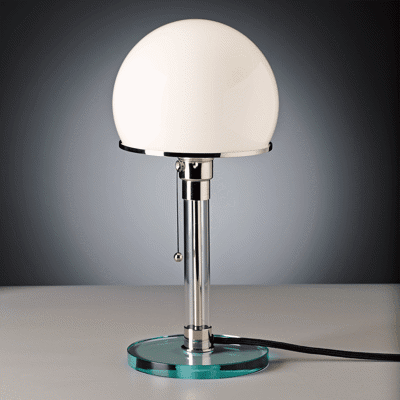
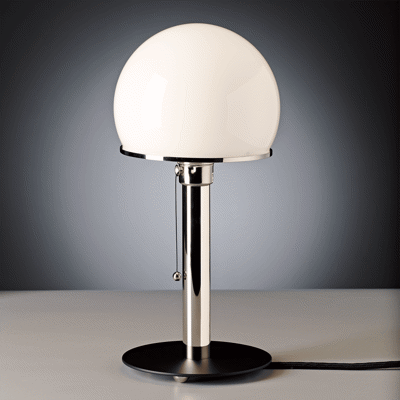
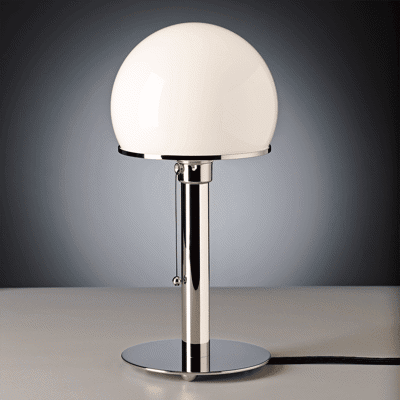
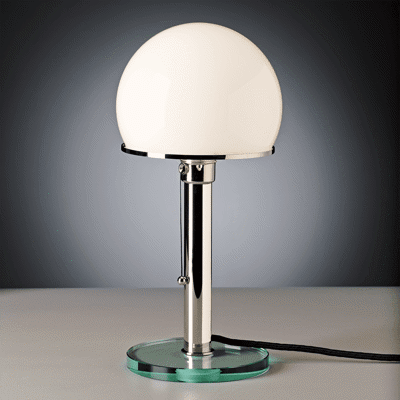
- Table lamps — compact, balanced light for living areas and sideboards, often with opal glass diffusion.
- Floor lamps — vertical presence with calm ambient light, ideal for reading corners and lounges.
- Ceiling & pendant lamps — clear overhead geometry, structured to illuminate zones without harsh glare.
- Wall lamps — architectural light accents that define surfaces, corridors and functional areas.
- Task & desk lamps — precise, adjustable light rooted in workshop logic and usability.
How Bauhaus “types” are defined
Placement
Table, floor, ceiling and wall—defined by spatial role and viewing angle.
Light effect
Diffuse ambient light vs. directed task light—controlled glare and clear illumination.
Mechanics
Fixed geometry vs. adjustable arms, joints and movement—function made visible.
Common sub-types you’ll see in Bauhaus lighting
Within the core categories, you’ll often find functional variations such as reading lamps, clamp lamps, workshop/task lights, uplights, and multi-purpose lamps. They are still “Bauhaus” when the design remains disciplined: clear proportions, honest construction, and light that serves the room.
Quick choosing tip (use-first approach)
Start with what the space needs: ambient calm (diffuse glass and balanced glow), focused work light (adjustable task lamps), or architectural structure (ceiling and wall solutions). Bauhaus types are less about style names, and more about solving a lighting problem with clarity.