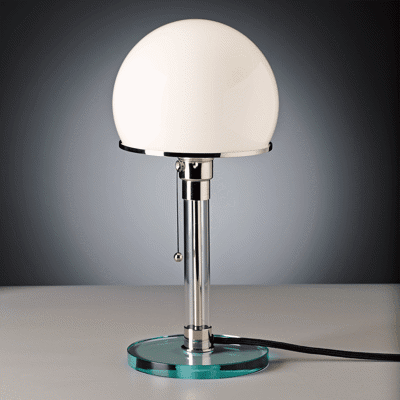
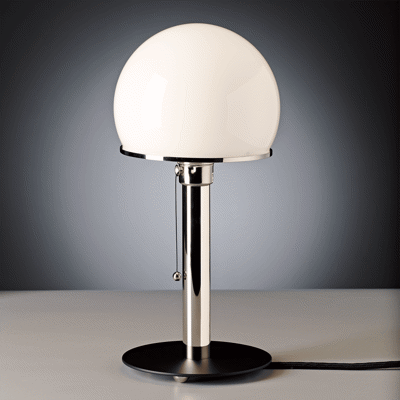
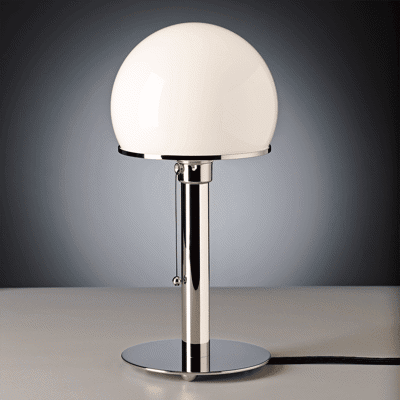
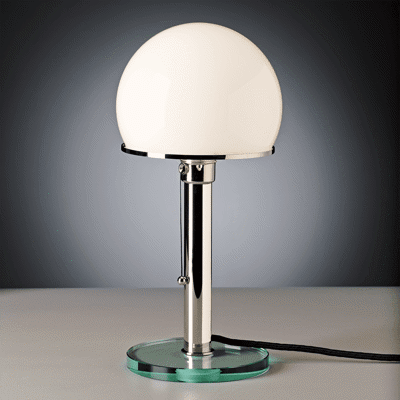
Who made the Bauhaus lamp?
Most people use “the Bauhaus lamp” as a shorthand for a type of modernist lamp—clean geometry, honest materials, and light designed to serve architecture rather than ornament.
The “Bauhaus lamp” was not made by one single person. Iconic Bauhaus-era lighting is associated with designers such as Marianne Brandt, Wilhelm Wagenfeld and Christian Dell, developed through the Bauhaus workshop method: function first, reduced form, and construction that makes materials and light behavior visible.
Why there isn’t just one “Bauhaus lamp”
Bauhaus objects were often developed in workshops—with an emphasis on prototypes, refinement, and repeatable production. That’s why the question “who made it?” usually depends on which Bauhaus lamp model you mean: a glass-and-metal table lamp, an adjustable task lamp, or a technical lamp with moving joints.
Key designers associated with Bauhaus lighting
Marianne Brandt
Metal workshop design language: disciplined form, refined proportions, functional elegance.
Wilhelm Wagenfeld
Clear glass-and-metal constructions designed for everyday use and calm, balanced diffusion.
Christian Dell
Technical, adjustable lamps: mechanics, movement and usability translated into precise geometry.
Designer vs. manufacturer: what people really mean
- Designer — who developed the form and function within the Bauhaus method.
- Manufacturer — who produces the lamp today as a licensed re-edition or a reproduction.
- Model name — the clearest way to identify “which Bauhaus lamp” someone means.
How to answer this question correctly (fast)
If you want the exact origin, identify the model first (table, floor, ceiling, task). Then confirm whether it’s an original, a licensed re-edition, or a reproduction. That single step removes most confusion—and helps you match the right designer and production lineage.