Who are the Bauhaus lamp designers?
Bauhaus lamps were designed by a small group of designers working within the Bauhaus workshops, where lighting was treated as a functional component of architecture rather than a decorative object.
Key Bauhaus lamp designers include Marianne Brandt, Wilhelm Wagenfeld and Christian Dell. Their lighting designs followed a shared modernist approach based on functional clarity, reduced geometry and honest materials, rather than personal artistic expression.
Designers working within the Bauhaus method
Bauhaus lighting was developed in workshops, not as individual signature pieces. Designers worked collaboratively, focusing on reproducibility, usability and integration into architectural space.
Marianne Brandt
Known for refined metalwork and lighting designs that balance industrial materials with precise proportions.
Wilhelm Wagenfeld
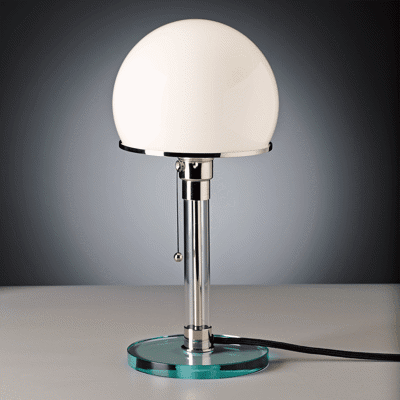
Associated with clear glass-and-metal constructions designed for everyday use and calm illumination.
Christian Dell
Focused on adjustable, technical lamps emphasizing movement, mechanics and functional clarity.
Why Bauhaus lamps are not defined by names
Unlike later designer movements, Bauhaus lamps are not primarily associated with branding or authorship. Their relevance lies in the Bauhaus approach itself: solving practical problems through form, material and construction.
Bauhaus designers and today’s lamps
Most Bauhaus lamp designs available today are produced as licensed re-editions based on historical drawings and specifications. They continue the Bauhaus idea of creating functional objects for everyday use.